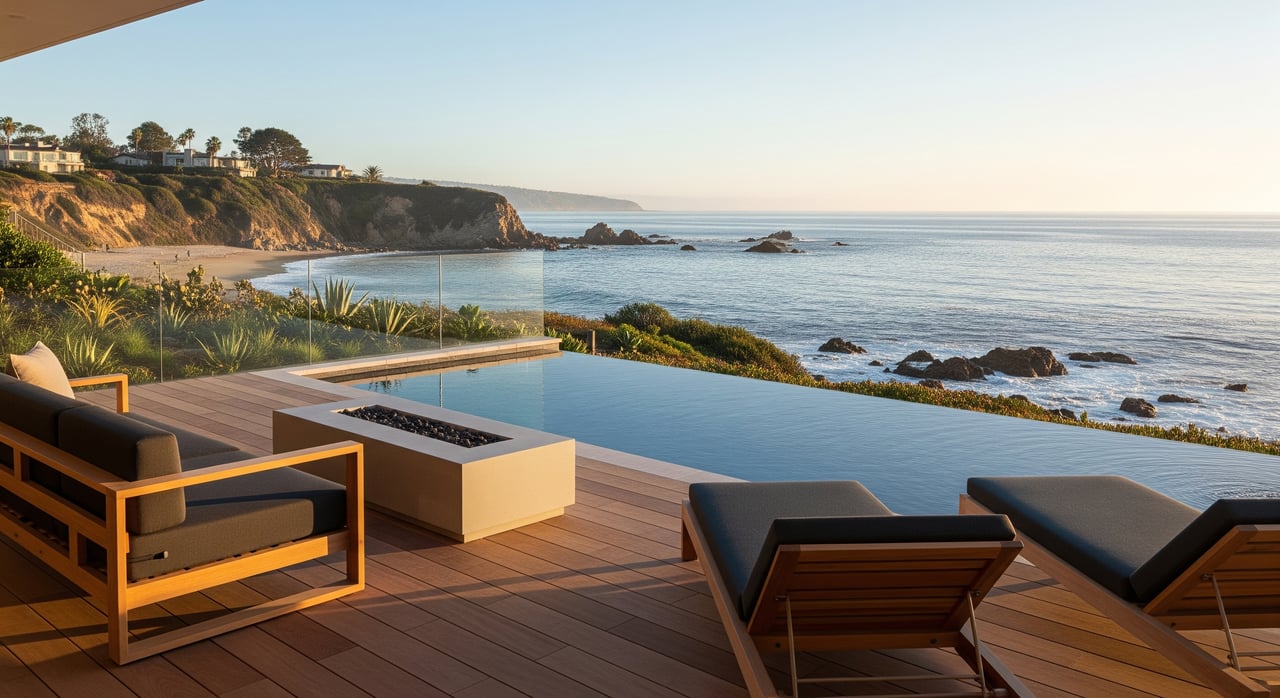
Are you dreaming about a home where the ocean sets your daily rhythm, but you’re torn between being on the sand or above it? It’s a good problem to have, especially in Corona del Mar, where both oceanfront and ocean-view homes deliver a premier coastal lifestyle. Still, the right choice depends on how you live, how you host, and what you value most. This guide breaks down the trade-offs, costs, risks, and best practices so you can move forward with clarity. Let’s dive in.
Oceanfront vs ocean-view: clear definitions
Understanding the terms helps you compare apples to apples.
- Oceanfront: Directly adjacent to the shoreline with unobstructed, usually ground-level access to the beach or intertidal area. Some homes sit behind seawalls or include stairs to public access.
- Ocean-view: Set back from the beach, often on bluffs or inland streets, with sightlines to the water. Views range from partial to wide panoramic.
- CdM subcategories:
- Bluff-top ocean-view: Elevated vistas with longer sightlines and potential paths to beach access.
- Village or street-level ocean-view: Partial or framed views from within the village grid.
- Harbor/channel vs open ocean views: Some buyers prefer the activity of Newport Harbor, while others want open Pacific horizons.
Corona del Mar’s local context and supply
Corona del Mar is a small coastal enclave within Newport Beach. Direct oceanfront parcels here are scarce, and that scarcity drives prestige and price. The village atmosphere, public beach access points, and proximity to restaurants and shops influence how you use the home, especially for second-home living.
Regulatory oversight from the City of Newport Beach and the California Coastal Commission can limit new shoreline development and affect what you can renovate or repair. That constraint helps protect long-term value for rare sites, but it can add time and cost to projects.
Pricing dynamics and what drives value
Both oceanfront and ocean-view homes are luxury assets, but they price differently because they deliver different experiences and carry different risks.
- Oceanfront value drivers: True beachfront access, lot width and depth, private or semi-private paths, and unobstructed water and sunset views at beach level. Uniqueness of the parcel matters and often commands a premium.
- Ocean-view value drivers: Elevation and the quality of the view, privacy from public areas, west-facing orientation for sunsets, lot size, and proximity to village amenities.
- Market behavior: Oceanfront is listed less often, yet demand is consistent when it appears. Ocean-view has more inventory and comparables, which can help appraisals and pricing.
- Resale considerations: Oceanfront can be highly liquid in hot markets, but carrying costs and regulatory hurdles may narrow the buyer pool. Ocean-view homes often appeal to a broader audience that prioritizes privacy and lower maintenance.
Orientation and elevation: how views really live
Orientation and elevation shape daily experience.
- West-facing: Highly prized for sunsets, with potential late-afternoon glare.
- East or north-facing: Softer light, but fewer visible sunsets.
- Elevation: Higher bluff-top homes tend to capture longer, broader views and may sit above the seasonal marine layer more often. Beach-level oceanfront offers immersive proximity, but activity at the shoreline can narrow sightlines at times.
Privacy, public access, and lifestyle trade-offs
Every location choice has pros and cons. Decide what you want every day to feel like.
- Oceanfront pros: Immediate beach access, constant wave soundscape, and a front-row visual experience.
- Oceanfront cons: More pedestrian traffic, public pathways, and seasonal noise and parking activity. You have less control over what happens on the beach in front of you.
- Ocean-view pros: Greater separation from public areas, quieter settings, and more privacy. Landscaping can buffer sightlines.
- Ocean-view cons: Potential for future development to interrupt or frame views. Views can be oblique rather than straight-on.
Walkability to Corona del Mar’s village is a lifestyle priority for many second-home buyers. If daily errands and restaurant access matter more than sand access, weigh village proximity heavily.
Microclimate: marine layer, wind, and salt
Coastal microclimates can shape comfort and maintenance.
- Oceanfront: Stronger exposure to wind, salt spray, and cooler evenings. Exterior materials and systems typically require more frequent attention.
- Elevated ocean-view: Depending on height and topography, you may be above the marine layer more often, with sunnier conditions and less direct spray.
Maintenance realities for coastal properties
Owning near the ocean means planning for ongoing upkeep. Budget for materials and specialists who understand marine conditions.
- Salt and corrosion: Expect accelerated wear on metal fasteners, railings, garage mechanisms, and HVAC components. Marine-grade materials and coatings are standard.
- Exterior systems: Roofs, windows, glazing, and decks often need more frequent replacement due to UV, wind, and salt.
- Structure and site: Bluff-top homes may need geotechnical review. Oceanfront homes might involve seawalls or shoreline structures that require maintenance and permitting.
- Moisture and pests: Humidity can drive wood rot and mold risk. Inspections should include moisture checks and wood-destroying organism evaluations.
Coastal hazards to understand
Risk awareness is part of smart coastal ownership.
- Erosion and bluff stability: Some shoreline segments sit on sea bluffs. Setback rules and site-specific geology influence what you can build or change.
- Sea level rise and storm surge: Higher tide flooding during storms is a concern for certain properties. This can affect insurability and long-term planning.
- Tsunami risk: Southern California has mapped inundation zones and evacuation routes. Review local maps and plans for any property under consideration.
Permitting and coastal regulations
Expect additional oversight for work near the coast.
- Regulators: The California Coastal Commission and the City of Newport Beach oversee coastal development, public access, and shoreline structures like seawalls.
- Project implications: Repairs and replacements for seawalls or bluff stabilization can be time-consuming and expensive. Confirm permit history before assuming scope or timelines.
Insurance and carrying costs
Insurance is more complex on the coast and varies by property.
- Flood insurance: Standard homeowners policies exclude flood. Properties in Special Flood Hazard Areas may require separate flood coverage through federal programs or private carriers.
- Market conditions: Availability and cost can shift as risk perceptions change. Lenders often require flood zone determinations and may stipulate additional policies.
Your due-diligence checklist
Use this checklist to prepare, compare, and protect your investment.
Preliminary checks before touring
- Confirm zoning, lot lines, and any public easements or access points along the frontage.
- Pull recent oceanfront and ocean-view comparables. Track price per square foot, days on market, and concessions.
- Check FEMA flood map status and tsunami inundation maps. Note base flood elevation if relevant.
- Request HOA documents, CC&Rs, and rules on short-term rentals.
On-site inspection items to verify
- Elevation and finished floor height relative to mean high tide and base flood elevation.
- Seawall, bluff, and shoreline structures: age, permits, maintenance records, and any engineering reports.
- Signs of salt corrosion on metal components and the condition of exterior finishes.
- Roof, windows, glazing quality, and drainage that moves water away from the structure.
- Mechanical systems: HVAC age and corrosion, water heater, plumbing type, electrical service capacity.
- Termite and moisture intrusion checks in crawlspaces and basements if present.
- Privacy and sightlines from public walkways and adjacent lots. Consider possible future development.
- Parking and vehicle access for daily use and guests.
Smart questions for sellers and pros
- Are there any active or pending coastal development or seawall permits tied to the property?
- Have there been insurance claims related to flood, water intrusion, or storm damage?
- How often are major exterior maintenance items needed, such as repainting or deck replacement?
- For bluff-top homes, are there geotechnical reports on slope stability and what do they conclude?
- If rental income is a factor, what are the city, HOA, and county rules on short-term rentals? Any prior enforcement actions?
Which choice fits your profile?
Match your goals to the property type that supports them.
- Move-up buyer focused on livability and privacy: Bluff-top or elevated ocean-view homes often deliver privacy, sunnier exposures, and lower maintenance. Walkability to the village may outweigh direct sand access.
- Second-home buyer seeking immersive beach experience: Oceanfront provides unmatched access and sensory impact. Expect higher maintenance, tighter permitting, and possible limits on renovation scope.
- Investor or mixed-use buyer: Verify short-term rental legality first. If rentals are limited, ocean-view homes may offer broader long-term resale appeal to owner-occupiers.
How to compare two specific homes
When you have two finalists, score each across these categories on a simple 1 to 5 scale and compare totals.
- View quality: width, depth, and orientation.
- Privacy: separation from public areas and neighboring sightlines.
- Access: beach, village, parking, and guest logistics.
- Condition: exterior materials, windows, roof, and mechanicals under coastal stress.
- Risk: flood zone, bluff stability, and shoreline structures.
- Flexibility: permit history and likely feasibility of planned improvements.
- Carry costs: expected maintenance and insurance.
Next steps in Corona del Mar
Choosing oceanfront or ocean-view in CdM is less about right or wrong and more about how you plan to live. If you want a clear comparison of active and off-market options, property-specific risk reviews, and a showing plan tailored to your lifestyle, connect with a local advisor who lives and breathes this coastline. For a private consultation and curated tours, reach out to Paolo Galang.
FAQs
What is the key difference between oceanfront and ocean-view in Corona del Mar?
- Oceanfront is directly adjacent to the shoreline with immediate beach access, while ocean-view sits back from the sand and offers water views from elevated or inland positions.
Are oceanfront homes in CdM harder to insure than ocean-view homes?
- Coastal properties can face higher premiums, and flood insurance may be required in certain zones; specific availability and cost depend on the property’s flood designation and risk profile.
How does the marine layer affect views in CdM homes?
- Elevated ocean-view homes may sit above the marine layer more often, which can mean sunnier conditions, while beach-level locations can experience more fog and cooler, windier conditions.
What should I evaluate about seawalls or bluffs before buying in CdM?
- Review permits, age, maintenance records, and any engineering or geotechnical reports, and understand that repairs or replacements often require additional coastal approvals.
Can I rent out a CdM oceanfront home as a short-term rental?
- Short-term rental rules vary by city and HOA, and Newport Beach policies can be restrictive, so verify legality and any permits or past enforcement before relying on rental income.