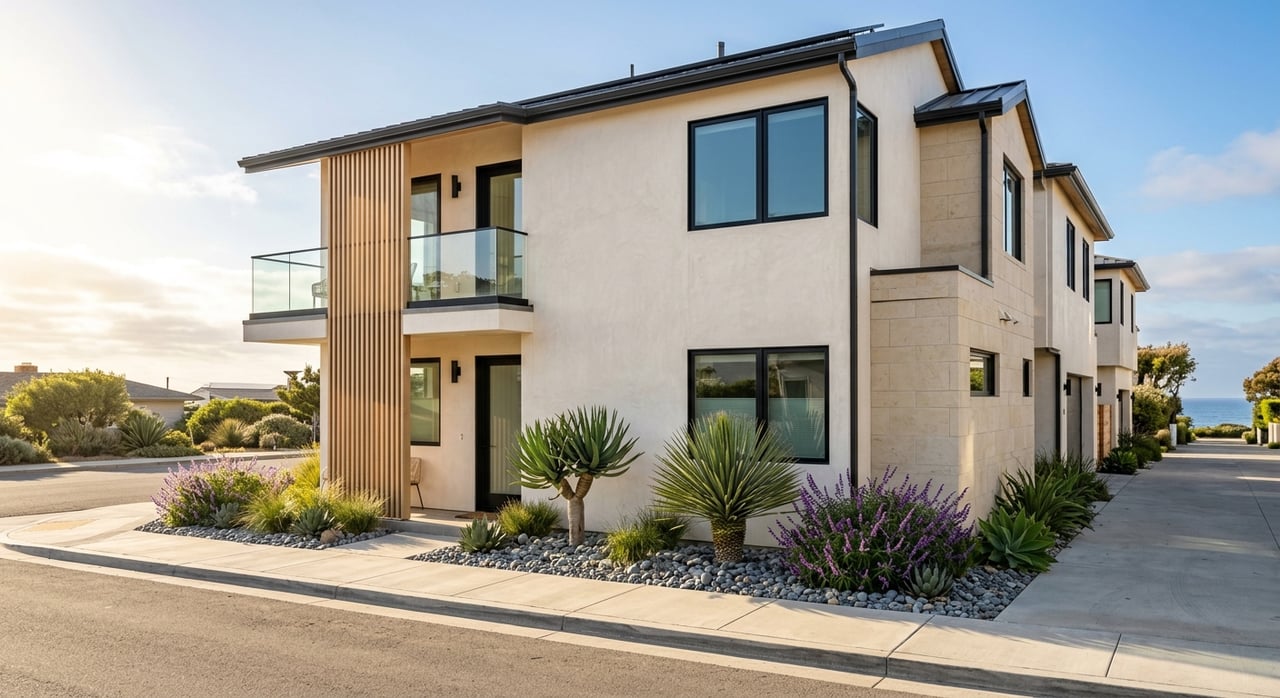
If you want Orange County access without a strictly beachfront lifestyle, Costa Mesa stands out fast. It sits just one mile from the Pacific Coast, with Newport Beach about two miles away, yet it offers a more layered identity built around arts, commerce, design, and everyday convenience. For buyers drawn to creative energy, entrepreneurial momentum, and near-coastal living, Costa Mesa has a compelling mix. Let’s dive in.
Near-Coastal Access Shapes Daily Life
Costa Mesa appeals to many buyers because it gives you coastal proximity without direct beachfront constraints. The city describes itself as just one mile from the Pacific Coast, which puts beach time, ocean air, and Newport Beach access close at hand.
That distinction matters. If you want to be near the coast but also value a broader mix of housing, retail, work hubs, and cultural venues, Costa Mesa offers a different experience than a purely beach-focused city.
Laguna Beach is also within easy regional reach at about 18 miles away, which adds to the sense that Costa Mesa sits in a well-connected coastal pocket of Orange County. For many buyers, that balance of access and flexibility is the foundation of the city’s appeal.
Arts Identity Feels Built In
Costa Mesa is not simply near the coast. It also has a strong public identity as the City of the Arts, and that shapes how the city looks, feels, and functions.
The city’s official Theater District includes Segerstrom Center for the Arts, South Coast Repertory, Argyros Plaza, and the Orange County Museum of Art. Segerstrom Center also notes a wide range of performances and community programming, along with resident companies and campus partners that keep the area active.
For creative professionals and design-minded buyers, this concentration of arts infrastructure gives Costa Mesa a more curated and urban feel than many surrounding suburban markets. You are not relying on one venue or one seasonal event. The cultural presence is part of the city’s day-to-day identity.
A Creative City Needs Real Anchors
In Costa Mesa, the arts are backed by visible institutions, gathering spaces, and year-round programming. That gives the city a stronger sense of place than a market where culture feels secondary to housing alone.
For buyers who care about inspiration, walkable destinations, or simply living near places with visual and creative energy, that can be a meaningful advantage. It helps explain why Costa Mesa often resonates with people in design, media, brand, consulting, and other idea-driven fields.
Retail And Dining Support A Creative Lifestyle
Costa Mesa’s appeal also comes from the way its shopping and dining districts reflect different styles and moods. The city is home to South Coast Plaza, which describes itself as a premier luxury shopping destination with more than 230 boutiques, dining options, performing arts, and special events.
At the same time, SOCO brings together over 300,000 square feet of design showrooms, creative studios, specialty retail, food stores, a weekly farmers market, and outdoor gathering areas. That gives the city a design-focused commercial layer that feels especially relevant for buyers who value aesthetics, interiors, and local creative businesses.
Then you have The CAMP and The LAB, both known for a more independent and alternative retail mix. The city itself describes The LAB, The CAMP, and SOCO as cutting-edge or counter-culture retail developments, which helps explain Costa Mesa’s range.
Different Corridors, Different Energy
Costa Mesa’s General Plan identifies seven major commercial corridors, including South Coast, Bristol Street, Harbor Boulevard, East 17th Street, Newport Boulevard, and West 19th Street. Each corridor offers its own mix of shopping, dining, office, and service uses.
East 17th Street is especially notable because the city describes it as serving both local residences and businesses through a mix of retail, service, and office uses. For entrepreneurs and creative professionals, that kind of corridor adds practical convenience to the lifestyle story.
Instead of one central district doing all the work, Costa Mesa offers multiple nodes of activity. That creates variety and gives different parts of the city their own rhythm.
Costa Mesa Works For Live-Work Buyers
Costa Mesa is more than a residential market with nearby amenities. The city’s economic profile suggests it functions as a real live-work environment, which is part of its draw for entrepreneurs and professionals.
In the city’s 2024 community economic profile, the largest employment sectors are Professional, Scientific, and Management Services at 19 percent, Retail Trade at 17 percent, Arts, Entertainment, and Accommodations at 15 percent, and Education and Health Care Services at 13 percent. Together, those sectors account for 64 percent of local employment opportunities.
That mix helps explain why Costa Mesa often feels active throughout the day. It supports a market where people live near workplaces, clients, retail destinations, and cultural venues rather than depending on a purely bedroom-community pattern.
A Connected And Digitally Ready City
Census QuickFacts add another layer to the story. In Costa Mesa, 45.0 percent of adults age 25 and over have a bachelor’s degree or higher, 95.8 percent of households have broadband internet, and the mean travel time to work is 22.4 minutes.
Those figures suggest a population that is educated, connected, and comfortable with a fast-moving lifestyle. For remote workers, founders, consultants, and other flexible professionals, that kind of environment can feel like a natural fit.
Costa Mesa is also diverse, with 22.3 percent of residents foreign-born and 36.5 percent of residents age 5 and over speaking a language other than English at home. That adds to the city’s layered and internationally influenced feel.
Housing Variety Matches Different Goals
One reason Costa Mesa attracts a broad range of buyers is that the housing stock is not one-note. According to SCAG’s local profile, the city’s housing mix includes 39.6 percent single-family detached homes, 10.2 percent single-family attached homes, 13.3 percent multifamily units with two to four units, and 34.7 percent multifamily units with five or more units.
That is useful context if you are looking for flexibility. In the same market, you may find detached homes, attached homes, condos, townhomes, and smaller multifamily formats that serve different budgets and lifestyle needs.
The city is also 99 percent built out, which means Costa Mesa does not have much room for large-scale new subdivisions. Instead, single-family construction now happens mostly through infill, especially in Eastside and Westside Costa Mesa.
Why Infill Matters
Because the city is largely built out, Costa Mesa often appeals to buyers who appreciate a more established urban fabric. You are more likely to see renovated older homes, updated properties within existing neighborhoods, and newer attached product woven into the city rather than master-planned expansion at the edges.
The city’s planning documents also support a diverse range of housing forms, types, and densities, while directing future growth along commercial, industrial, and mixed-use corridors and preserving established neighborhoods. In practical terms, that helps explain why modern townhomes, clustered housing, and refreshed homes can coexist within the same market.
For creative and entrepreneurial buyers, that can be a real plus. You may have more options to align your home choice with your priorities, whether that means lock-and-leave convenience, design potential, or proximity to favorite commercial districts.
Neighborhood Structure Adds Choice
Costa Mesa identifies seven residential neighborhood areas: Eastside, Westside, Mesa Verde, College Park, North Costa Mesa/Mesa Del Mar/Halecrest Hall of Fame, Bristol/Paularino, and South Coast/Wimbledon Village. That structure gives buyers multiple ways to experience the city.
Some areas are more closely tied to major corridors and higher-density housing, while others feel more established and residential in pattern. The city notes that higher-density neighborhoods are clustered near Orange Coast College, Mesa Verde Drive East, Adams Avenue, Vanguard University, the northeast South Coast Metro area, downtown, and the southeast part of the city.
This does not mean one area is universally better than another. It means Costa Mesa gives you real variety, and your best fit depends on whether you value access to arts venues, retail corridors, commute routes, or a more tucked-in residential setting.
Costa Mesa Has Energy Without Being Singular
The strongest case for Costa Mesa is not that it imitates a beach town. It is that it offers coastal access without beachfront singularity.
You get quick access to the coast, a strong arts identity, a wide retail and dining ecosystem, multiple commercial corridors, and housing choices that reflect a mature, built-out city. That combination creates a market that feels energetic, flexible, and design-aware.
For coastal creatives and entrepreneurs, that can be exactly the point. Costa Mesa lets you stay close to Newport Beach and the Pacific while living in a city with more layers, more movement, and more everyday range.
If you are considering Costa Mesa as part of your Orange County search, a local perspective can help you compare neighborhood feel, housing options, and proximity to the places that shape your routine. To explore the market with a more tailored approach, connect with Paolo Galang.
FAQs
Is Costa Mesa a beachfront city in Orange County?
- No. Costa Mesa is best understood as a near-coastal city. The city says it is one mile from the Pacific Coast, with Newport Beach about two miles away.
Why does Costa Mesa appeal to creative professionals?
- Costa Mesa has a concentrated arts district, design-oriented retail, independent shopping destinations, and a mix of commercial corridors that create a more curated and energetic environment.
What types of homes can you find in Costa Mesa?
- Costa Mesa offers a mix of single-family detached homes, attached homes, condos, townhomes, and multifamily properties, with much of its newer activity happening through infill development.
Does Costa Mesa work well for entrepreneurs and remote professionals?
- It can. The city has strong representation in professional services, retail, and arts-related employment, along with high broadband access and a relatively short mean travel time to work.
Are there distinct neighborhood areas within Costa Mesa?
- Yes. The city identifies seven residential neighborhood areas, including Eastside, Westside, Mesa Verde, College Park, North Costa Mesa/Mesa Del Mar/Halecrest Hall of Fame, Bristol/Paularino, and South Coast/Wimbledon Village.